Monday, 18 October 2010

Plagiarism

Just a few weeks ago a colleague (whom I won't name) made the case that as university teachers we shouldn't be taking plagiarism so seriously. 'Plagiarism is a useful life skill,' went the argument. 'We aren't actually doing our students any favours by taking such a draconian attitude towards it.'

Here's an interesting articulation of a very different point of view:


Saturday, 29 May 2010

Staging Post

A colleague and I went out to dinner last night to celebrate the end of one more batch of marking. This is the picture she took of our marvellous Italian puddings! The torta della nonna (at the back) was mine, and every spoonful was delicious.

This doesn't mean that the marking is over, at least for me, but the end is in sight. And with such generous-spirited and convivial colleagues, the whole process is rendered considerably easier.

I am now, however, back in my office, and am about to get busy with the next marking task. It's the hardest one of all, but in a week's time -- I tell myself! -- it really will be over.

Sunday, 23 May 2010

Research and Exams

As some of you already know, I spent 10 days earlier this month at the Folger Shakespeare Library in Washington. The Folger is a familiar name to anyone working in early modern studies, especially literary studies, and perhaps the real surprise is that this was my first visit. But, oddly, this year is the first time I've needed to work directly on Folger manuscripts, and thus have been able to make a cogent case for research funding. A successful application to the British Academy was critical in making this visit possible.
One of the hardest things in organising this visit was choosing the right time for it. The money all had to be spent between July 2009 and June 2010, and because of other commitments the two most obvious times for the journey -- last September and the Easter vacation -- weren't possible. As a result, it was very difficult to find a 10-day period when I could reasonably be away from the department. The time I identified fell between the start of the summer term, when I had to hold a revision lecture and several seminars, and the start of the exams. I was concerned in advance about whether it was really a good idea to be away from the university during this rather tense period.

My view now -- having come and gone, survived the volcano and coped with all those anxious student questions -- is that I could hardly have been away at a better time. Being so far away, and on a funded trip, meant that time which otherwise might have been spent inefficiently on email and admin had to be stewarded for research. I also don't underestimate the beneficial effects of Washington sunshine just before the stressful exam period. I'd recommend it (or the equivalent) to anyone.

Wednesday, 28 April 2010

testing, testing

Having trouble posting another entry. This is a test post.

Conference catch-up

I'm so out of practice in blogging that I'd quite forgotten I hadn't posted about my recent conference experiences.


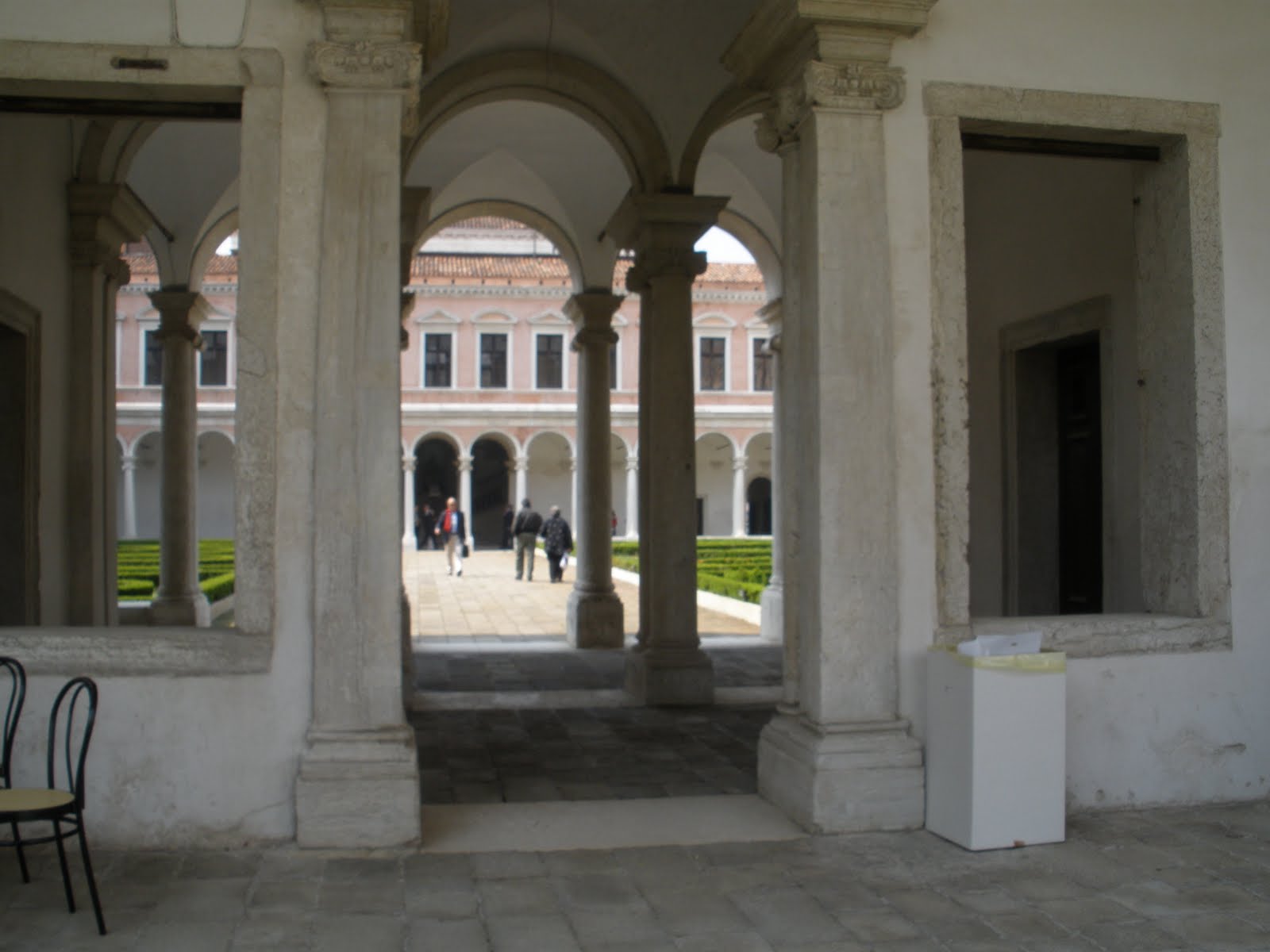
A colleague and I travelled to Venice earlier this month for the annual meeting of the Renaissance Society of America. This is one of the key events in early modern literary studies, but I'd never actually attended it before. I will admit that the venue was an extra incentive.

I never look forward to travelling before I do it, so didn't have high expectations of this trip. So I was very agreeably surprised at how things went. Most importantly, the panel session in which I took part owas a great success. The room was packed out, and we even had to bring in extra chairs. I am always very self-critical when I give papers, but I felt that this one was one of the best I've presented lately. It may have helped that I was speaking on a topic which was largely new to me: hence there were fewer stray facts to get in the way of my argument.

Lots of people I know from different stages of my academic life were at the conference, so there was lots of catching-up and sharing news and ideas, typically over pizza or ice cream. And there is even talk of three of us joining forces to offer a panel at next year's meeting in Montreal.

All in all, worth doing, though somewhat stressful beforehand. I must remember this for next time.

Wednesday, 17 February 2010

Web 2.0 for teaching -- my first experiment (3)

So, to take stock. How do I feel my first use of Web 2.00 for teaching worked out? Would I do it again? If so, what would I do differently?

Despite the shaky start and the relatively poor participation figures, I felt very encouraged by this Web 2.0 exercise. Week 10 -- as I'd always realised -- was rather late in the semester to be trying something new with the students. Many of them, by that stage of term, had already decided to write their essays on texts and topics we had addressed in earlier weeks, and so had little incentive to try anything new. On the other hand, I was very impressed by the commitment of those students who, despite not intending to write on either Behn or editing, did take the trouble to participate in the exercise. We saw the beginning of some very interesting discussions within the Google doc itself, and these helped to stimulate a very well-informed debate in the seminar. And the student who chose to write on editing issues got the opportunity to try out some of her ideas, to benefit from feedback, and to ask questions.

If the course runs again next year, I do intend to try a version of this exercise again. I will avoid the email address problem by setting up a new Googlemail account exclusively for teaching purposes. More importantly, I will introduce Web 2.0 exercises much earlier in the semester: possibly as early as week 2. I am also toying with the idea of spending three weeks on Aphra Behn next year, planning separate seminars on her poetry, prose and drama, and using a version of this year's Web 2.0 task in the preparations for the poetry week. Revised in the light of this year's experience, it should work better a second time.

So I am heartily encouraged by my first experience of using Web 2.0 for teaching, and fully intend to try again.

Thursday, 11 February 2010

Web 2.0 for teaching -- my first experiment (2)

So what did happen?

Within seconds of sending my invitation to the students, I became aware of my first mistake. Because I'd never previously included myself in the invitees' list for a Google doc, I hadn't realised -- obvious though it now seems -- that the invitation which arrived in my addressees' inboxes would have come from my own Googlemail address. I now use my Googlemail account exclusively for personal correspondence, so although students' getting access to it wasn't really a problem, it was something I would have preferred to avoid.

It took a few days for anyone to post to the Google doc, and responses, when the came, were less plentiful than I might have hoped. Out of a seminar group of twelve students, five responded to the Google doc. One of the first postings was rather disappointing: the student had some useful comments about certain aspects of the poetry, but seemed to have forgotten all the issues of textual authority we'd so painstakingly discussed in the seminar itself. At that point, I began to wonder whether this Web 2.0 exercise had been any use at all.

I wrote back to this post, without commenting on the textual issues but asking a few questions about the content of the texts. To my surprise another student posted later in the same day, raising exactly the issues of authority, accessibility and the visibility of the editing process that I'd hoped our discussion would highlight. A third student raised some biographical issues, while a fourth discussed the problems involved in preserving original features of the text and the role of the editor in shaping readers' responses. Yet another student added further biographical information about Wharton and Rochester, and even linked to a document of her own in which she'd produced a sample edition of the poem to Wharton.

At the seminar itself, we had such an animated discussion of Behn's poetry that it all but squeezed out discussion of Oroonoko. And one student subsequently wrote her assessed essay on the issue of editing women's writing. This was the first time in all the years I'd taught the course that anyone had chosen to answer the 'editing' question.